
The Boy King mints his future
A 15-year-old closes in on Chris Gayle's six-hitting record and drives off-field values into orbit as he does...
Aeons ago, Sky televised the Hong Kong Sixes, an out of season hit and giggle tournament played at the spectacular but tiny Kowloon Cricket Club, where high netting was erected all around to stop the ball flying into unguarded streets. The name of the tournament properly alluded to the six-a-side nature of the teams, but its selling point, back in the day, was the novelty of watching the ball soar into the netting again and again. I remember writing about it during the glory days of blogging – something along the lines of ‘what more do you say about a tournament in which there have been 300 sixes?’
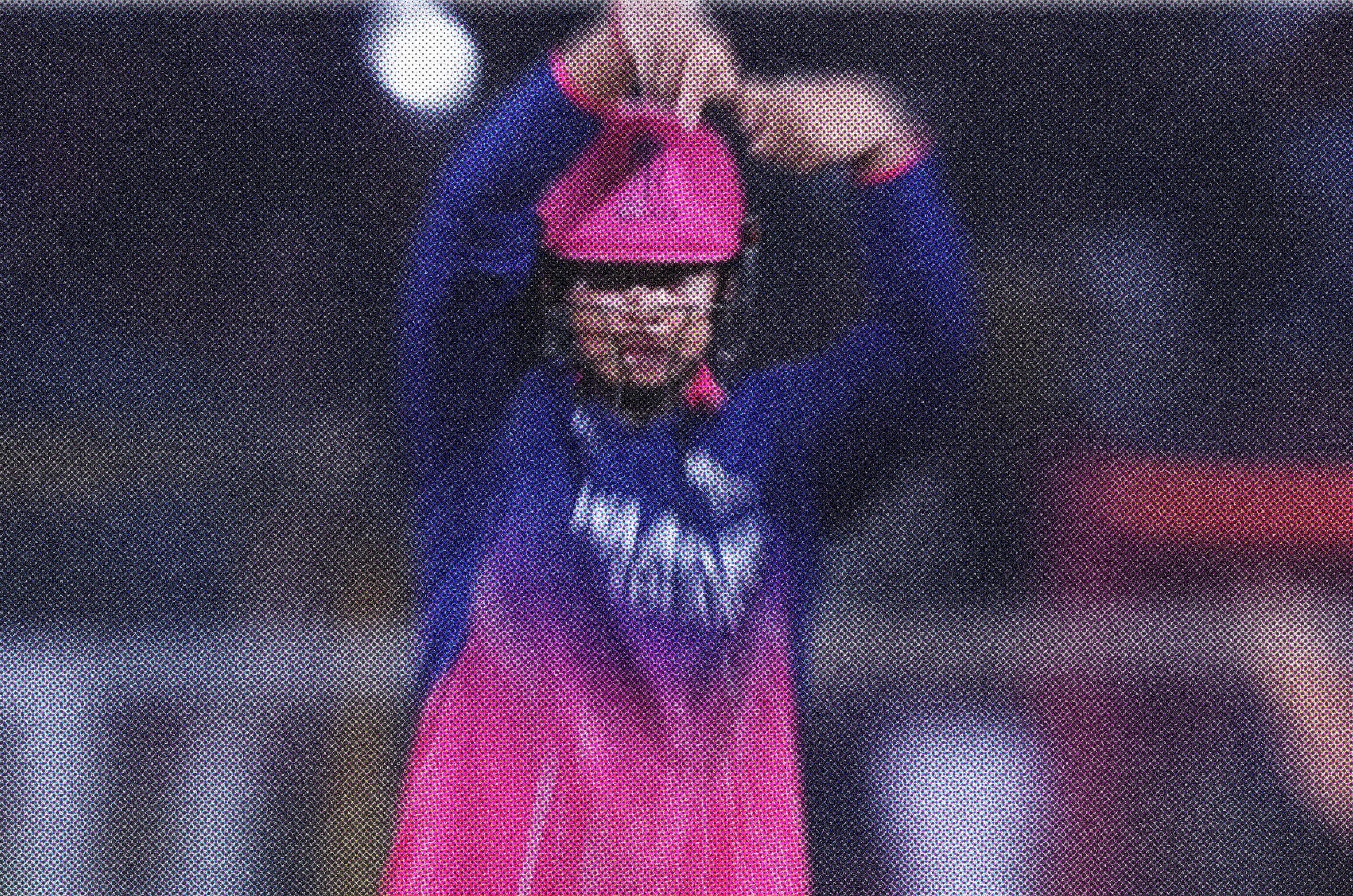
Three hundred! How quaint. How olde worlde and naive, how young and innocent in our view of this new currency. If only we’d seen it for what it was and would become – a newly-minted bitcoin just lying there at our feet. After yesterday’s game between LSG and Rajasthan, IPL 2026 has delivered 1,236 of them and counting. The game’s Boy King, Viabhav Sooryavanshi, has hit 53 on his own, closing in on one of the tournament’s apparently unapproachable records, the 59 struck by Chris Gayle back in 2012, when the Universe Boss was in his pomp and outlining what might be possible.
Even cool Chris may bat an eyelid at the idea of a fifteen-year-old blasting him into oblivion, but if it doesn’t happen this year – and the kid has at least one more game to go – someone will do it next. Why? Well take a listen to the regime of one of the breakout finishers of IPL 2026, Mukal Choudhary: ‘I try to hit 100 to 150 sixes every day in training.’
Right.
‘Five years ago,’ Mitchell Marsh said in the between-innings interview at yesterday’s game, ‘you’d walk off with 220 and be fairly confident, but now, not so much…’ Marsh’s 57-ball 96 and LSG’s 220-5 was duly reduced to rags and ashes by the ferocity of Sooryavanshi, Jaiswal and Jurel, the required rate down to less than eights after just 12 overs of the Royals’ reply.
There has been a generational shift on show. Despite noble efforts to raise their games, the old guard – KL, Virat, Jinx Rahane, even Rohit and Sanju – are just a flicker off the pace now, their strike rates still starting with an old-school one. Viabhav, Abhishek, Priyansh all begin with a two, and they are not going backwards from here.
The six has not just been sponsored and monetised. Its capacity to reset the possibilities of the T20 game has become the prime generator of the money away from the field of play. In a post earlier this month, the excellent Inside-Edge highlighted the evolution of the IPL from venture capital speculation to blue-chip medium-termism. The profundity of wonder on the field is magnified by relative scarcity – there are only ten franchises and a two-month season. It’s a magical formula.
In 2008, Manoj Badale bought the Royals, the last doggie in the window, for $67m, employed Shane Warne as his captain and won the inaugural tournament. The Royals have been perennial underdogs (and non-champions) ever since, but Badale nonetheless this year sold the franchise to Lakshmi Mittal and Adar Poonawalla for $1.65 billion, an 18x return on investment. Mittal and Poonawalla have not bought expecting the same rate of growth. Instead they have a financial near-certainty, a proven asset that will deliver just as all blue chip stock delivers, year-upon-year at a good return. As Inside-Edge noted (and I recommend reading the entire piece), the Financial Times reported that global asset managers like Blackstone, who took a stake in the recent sale of RCB for $1.78bn, do so ‘in the belief that (sport) will be relatively insulated from economic shocks.’
So, ten franchises each worth, at a conservative estimate, $1.5bn+. A league now valued behind only the NFL at $18.5bn, where every game is said to be worth around $15m. The next TV rights deal comes in 2027, and is expected to remain flat-ish – if you can call any and all of the above ‘flat’. It is the behemoth that dwarfs the rest of cricket, which can only look on in awe at the sums.
Imagine being fifteen years old and possessing the ability to mint the on-field currency that has driven all of this, and to do so at a rate that no-one else can. Sooryavanshi’s future is in one way unimaginable and in another already mapped out.
NB: As strike rates have soared, the existential nightmare of IPL bowling is oft debated. I think it comes down to this: can you deliver the over that turns the contest? Yesterday, after 12 overs the LSG score stood at 149-1. Not a single stanza had gone for less than 10, most for more than that, and all contained at least one boundary. Yash Raj bowled the next, took a wicket with his second ball and conceded seven. Brijesh Sharma bowled the next and gave just four, Yash the next and conceded five. For all of Sooryavanshi’s brilliance, the match was won and lost right there, by the bowlers.
The paperback edition of Vinciness is available to pre-order now by clicking here. Publishing 2 June 2026.
So noted one point from fine article. Sports recession proof? Like crime?
If Vaibhab beats Gayle record of most sixes in a season, that is a major moment in the sport. Like when Mark M Guire broke Roger Mairis most home runs in a season record.