
Greatness in passing
Southgate, Warne, winning, losing and the legacy of a mural
I was idly watching TV the other night, that BBC drama about Gareth Southgate. The actor playing Southgate really caught something of him, mostly his semi-quizzical facial expressions interspersed with a messianic stare into the mid-distance as he had another idea about the shape of England. Actually, no… forget the sarcasm. Bloody good bloke, Southgate. Did something no-one else has with all of those finals and semis and penalty shoot-outs. Changed the mood of the nation.
Anyway, there was a moment in the final episode when England were in Germany for the Euros in 2024, and Southgate spotted Andreas Moller doing a pre-match piece to camera. Moller was the player who’d scored the winning penalty for Germany in the semi-final of Euro 96, right after Southgate had missed his for England.
‘Andreas?’ Southgate said, and shook his hand. As they reminisced about the match, Southgate asked Moller how often he thought about what must have been the defining moment of both of their careers.
‘Oh no,’ said Moller. ‘It wasn’t the defining moment of my career. That was in 1998 against Croatia, when we lost 3-0.’
Southgate looked semi-quizzical at the news. According to the show at least, the missed penalty of ‘96 and what happened to him afterwards had become the pivotal event in his life, a fate that he was determined the footballers he managed would avoid.
Yet Andreas Moller had walloped home his penalty in unstoppable German fashion and spent barely a minute thinking about the English guy that missed. Why would he? Germany had a final to win.
And if the German football team of that era have a cricketing equivalent it’s probably Australia. They steamrollered everyone for a decade and more, so much so that their rare defeats, to India in 2001 and England in 2005 for example, became more talked about and celebrated than the endless run of victories they interrupted.
I was thinking about this as I looked again at Dan Toomey’s artwork for his Fisher Classics series of imagined book jackets.
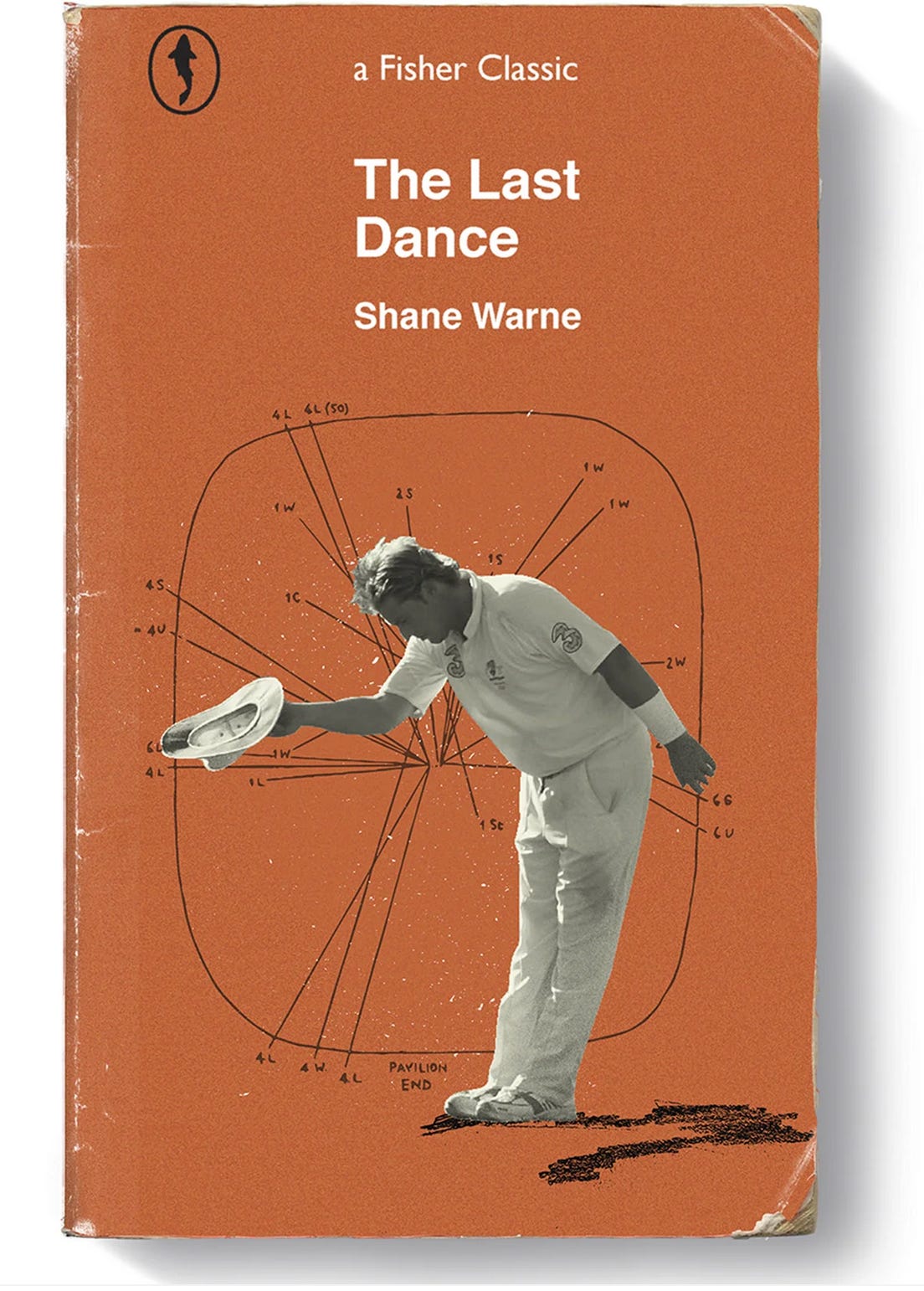
This is Shane Warne doffing his sunhat to the crowd in 2007, his final Ashes series when the defeat of 2005 was redressed in dreamlike fashion. The greatness of Warne had been cemented into history long before either of those series and their wildly different outcomes, but to me and I’m sure to others, he was never greater than in that 2005 loss. I can see him now walking off at the Oval, haloed by the sun, arm in arm with Glenn McGrath, beyond gracious to the England team and the English crowd, a true sportsman as well as a sporting great. He understood right away what he had been a part of creating. One team had won, the other had lost, but some things live much longer than that.
I expect most of that England team – a side that had been unchanged for the first four Tests of the series and yet would never play together again – will look back on those moments as a kind of reverse of Southgate’s feeling, a high that comes only once in a lifetime and leaves a different kind of void in its wake.
What was it to Shane Warne? I don’t know, obviously, but I would guess it wasn’t the high water mark or the lowest point, just part of the psychic architecture of an epic career.
***
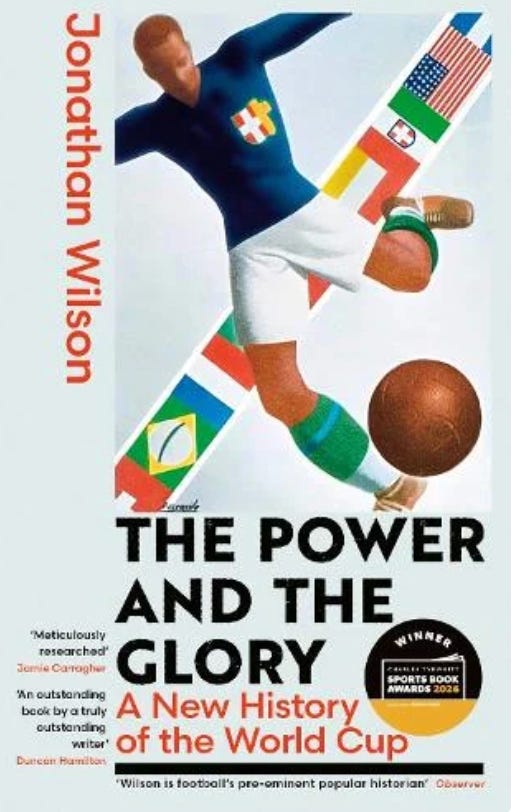
The football World Cup is almost here (no Southgate and with a German manager…), and there is no better companion than friend of this substack Jonathan Wilson’s The Power And The Glory, deservedly crowned Sports Book of the Year at the Charles Tyrwhitt Sports Book Awards. It’s brilliant, and it’s out now in paperback here and here.
***
Is there any common ground between Southgate and Warne? Superficially not. Southgate won nothing, Warne took home the lot multiple times, so there is no comparison there. But as the Southgate TV show made clear, his real talent was not football but empathy. He wanted to create something that lived beyond the immediacy of the results, and he did.
That’s what Shane Warne achieved as well. And Warne was an empath, too. He treated people well. In the first year of the IPL, he led the most under-resourced team to a maiden title against the odds. Rajasthan Royals have not won it since, but something of Warne’s spirit lingers in the team, as it does at Hampshire, where a stand is named after him at the Rose Bowl. His feats on and off the field there are part of the county’s mythology. He understood the players and the game and he wanted to make it as good for them as it was for him.
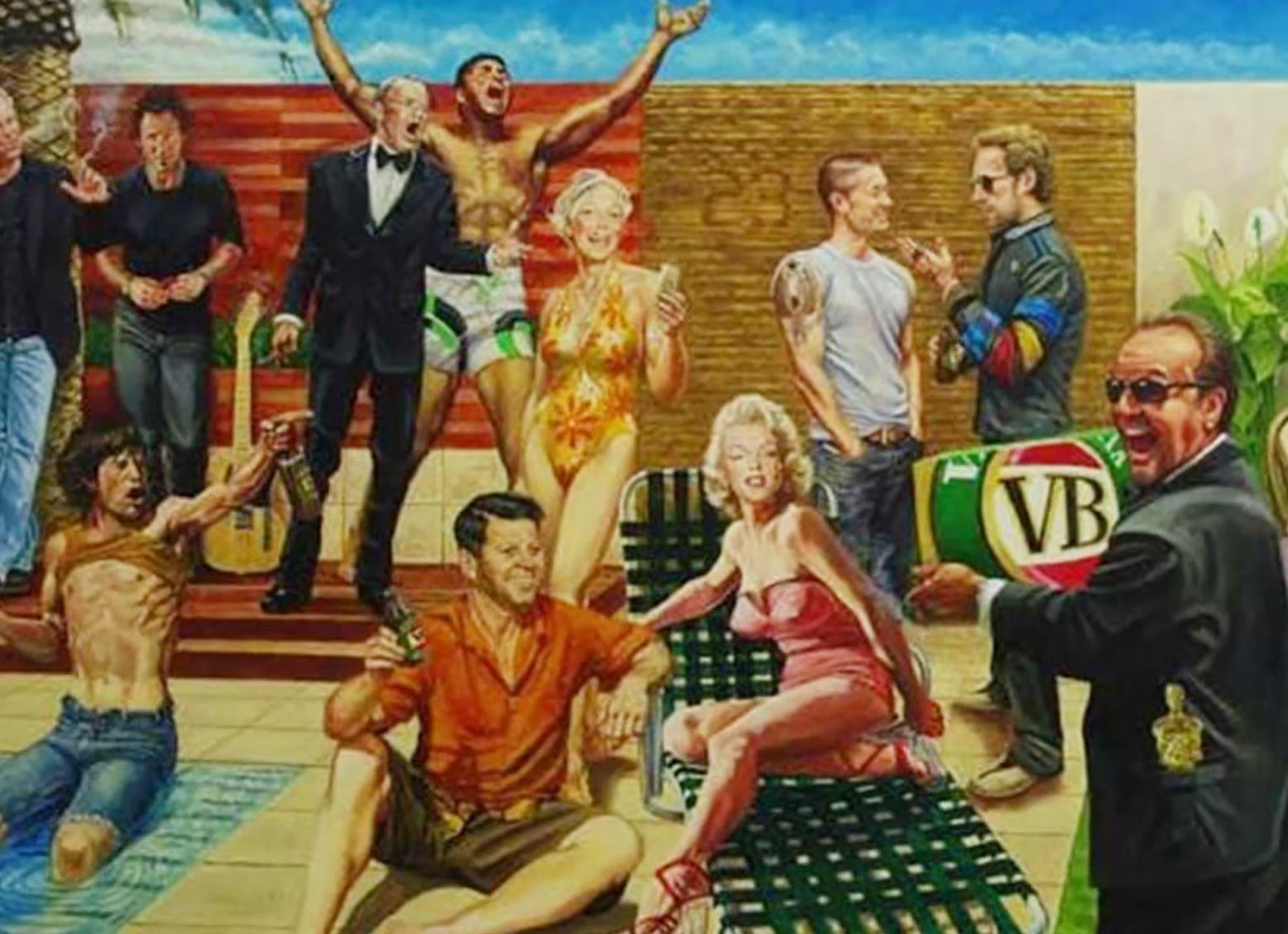
And if you need any more evidence, the inclusion of Dimi Mascarenhas in the legendary mural that adorned a wall in Warne’s house shows his love for his friends. The painting has humour and humanity beyond the madness of its conception.
Dimi is pictured playing poker with Sean Connery and James Dean, surrounded by hard living heroes. There is Sinatra, Marilyn, JFK, Elvis, Jagger, Jack Nicholson... Some of them made it through their excesses and some of them didn’t, and it’s still a giant sadness that Shane didn’t either. But he, like they, lives on in all that he has left behind.
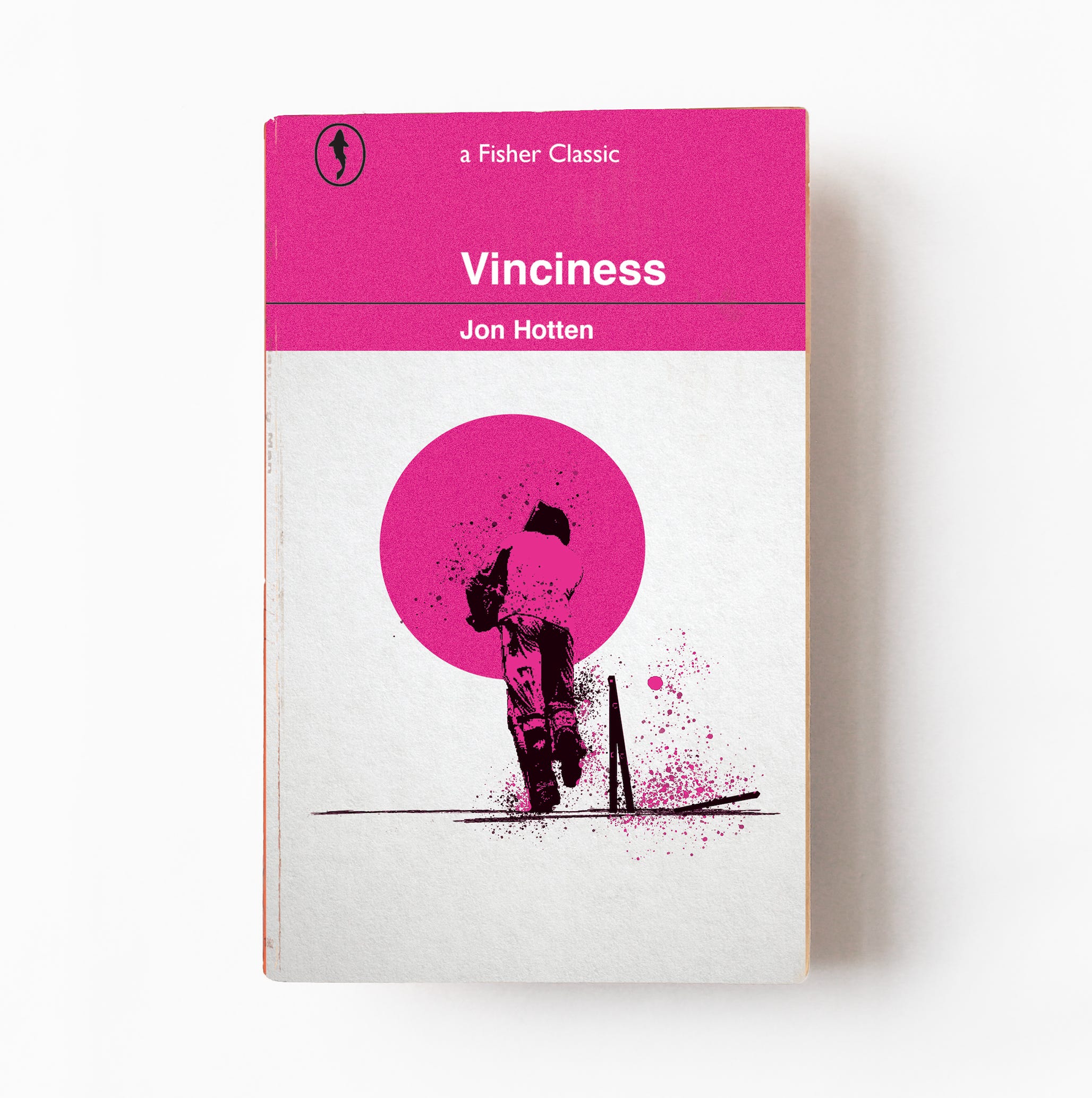
The paperback edition of Vinciness is available now by clicking here. Just £10 plus p+p. Cover and design by the aforementioned Dan Toomey, words by me.
'In its crisp prose and and reflective digressions, Vinciness is typically delightful’ - Gideon Haigh, Cricket et al.
Ah yes, more than likely Sir Les' inimitable (some say 'merciful heaven!)‘ ‘A Traveller's Tool’. GDoS is proud to host 312 citations from that little ripper.
Impenetrable? Not for one who has GDoS, dare I say. 17,346 terms in 22,082 senses. Just sayin’, mate.